NASA Astronomy Picture of the Day
From fsxNet's FSX_IMGE file echo.
Cocoon Nebula Wide Field
Monday, 21 September 2026
                        Astronomy Picture of the Day

    Discover the cosmos! Each day a different image or photograph of our
      fascinating universe is featured, along with a brief explanation
                    written by a professional astronomer.

                              2026 September 21
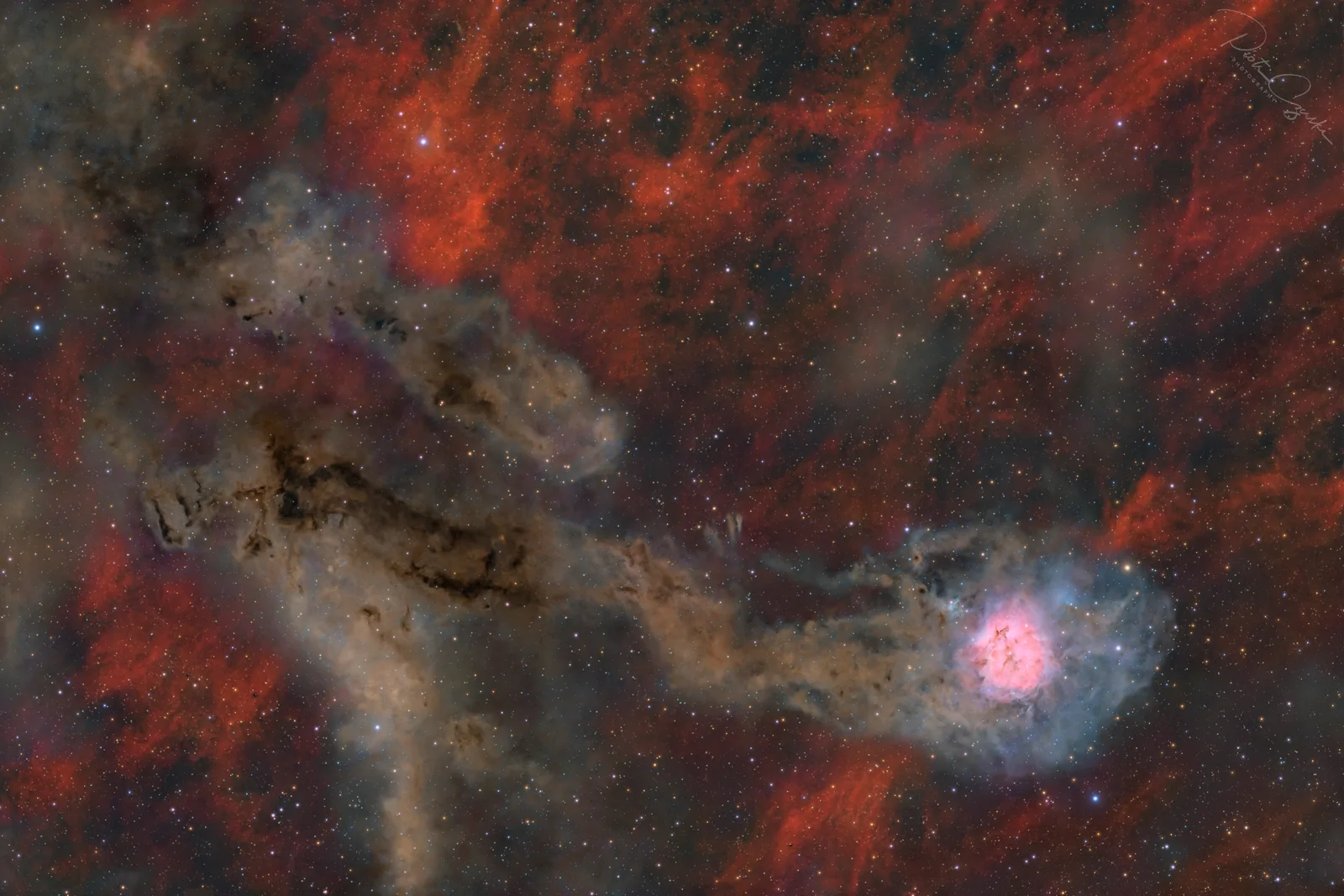
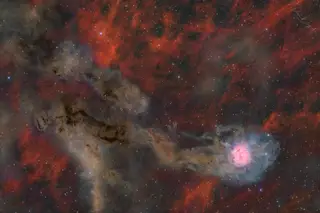
      A starfield is shown against a patchy red-glowing background. Two
   irregular brown trails occur, the lower of which culminates in a bright
     pink and white region. Please see the explanation for more detailed
                                information.

                          Cocoon Nebula Wide Field
                   Image Credit & Copyright: Piotr Czerski

   Explanation: When does a nebula look like a comet? In this crowded
   starfield covering over two degrees within the high-flying
   constellation of the Swan (Cygnus), the eye is drawn to the Cocoon
   Nebula. A compact star forming region, the cosmic Cocoon punctuates a
   nebula bright in emission and reflection on the lower right, with a
   long trail of interstellar dust clouds to the left, making the entire
   complex appear a bit like a comet. Cataloged as IC 5146, the central
   bright head of the nebula spans about 10 light years, while the dark
   dusty tail spans nearly 100 light years. Both are located about 2,500
   light years away. A bright star near the colorful nebula's center
   likely supplies power and helps clear out a cavity. The long dusty
   filaments of the tail, although dark in this visible light image, hide
   stars in the process of formation. The featured image was captured in
   July from Death Valley, California, USA.

           APOD's main NASA site is moving: From apod.nasa.gov to
                            science.nasa.gov/apod
                     Tomorrow's picture: triple eclipse
     __________________________________________________________________

       Authors & editors: Robert Nemiroff (MTU) & Jerry Bonnell (UMCP)
            NASA Official: Amber Straughn Specific rights apply.
                  NASA Web Privacy, Accessibility, Notices;
                      A service of: ASD at NASA / GSFC,
                           NASA Science Activation
                             & Michigan Tech. U.
Recent days
 Sep 29Sh2-188: The Shrimp Nebula
 Sep 27Andromeda before Photoshop
 Sep 26Mirrored Meteor and Milky Way
 Sep 22Chance Triple Alignment: Plane, Space Station, Sun
 Sep 21Cocoon Nebula Wide Field
 Sep 20Analemma over the Callanish Stones
 Sep 19A Zodiacal Night
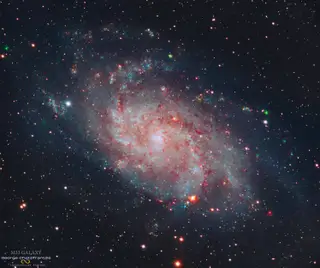 Sep 18Messier 33: The Triangulum Galaxy
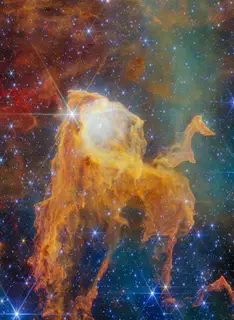 Sep 17A Treasure Chest in the Carina Nebula
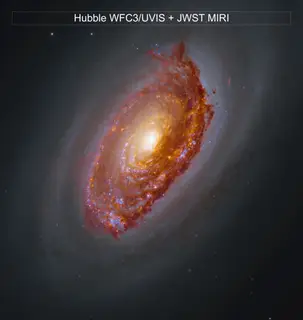 Sep 16Webb's View of M64
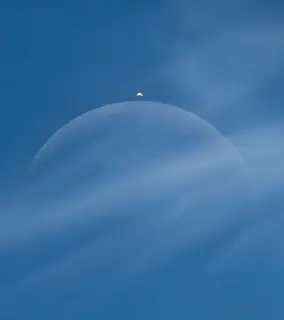 Sep 15A Daytime Eclipse: Moon Occults Venus
 Sep 14Where Your Elements Came From