NASA Astronomy Picture of the Day
From fsxNet's FSX_IMGE file echo.
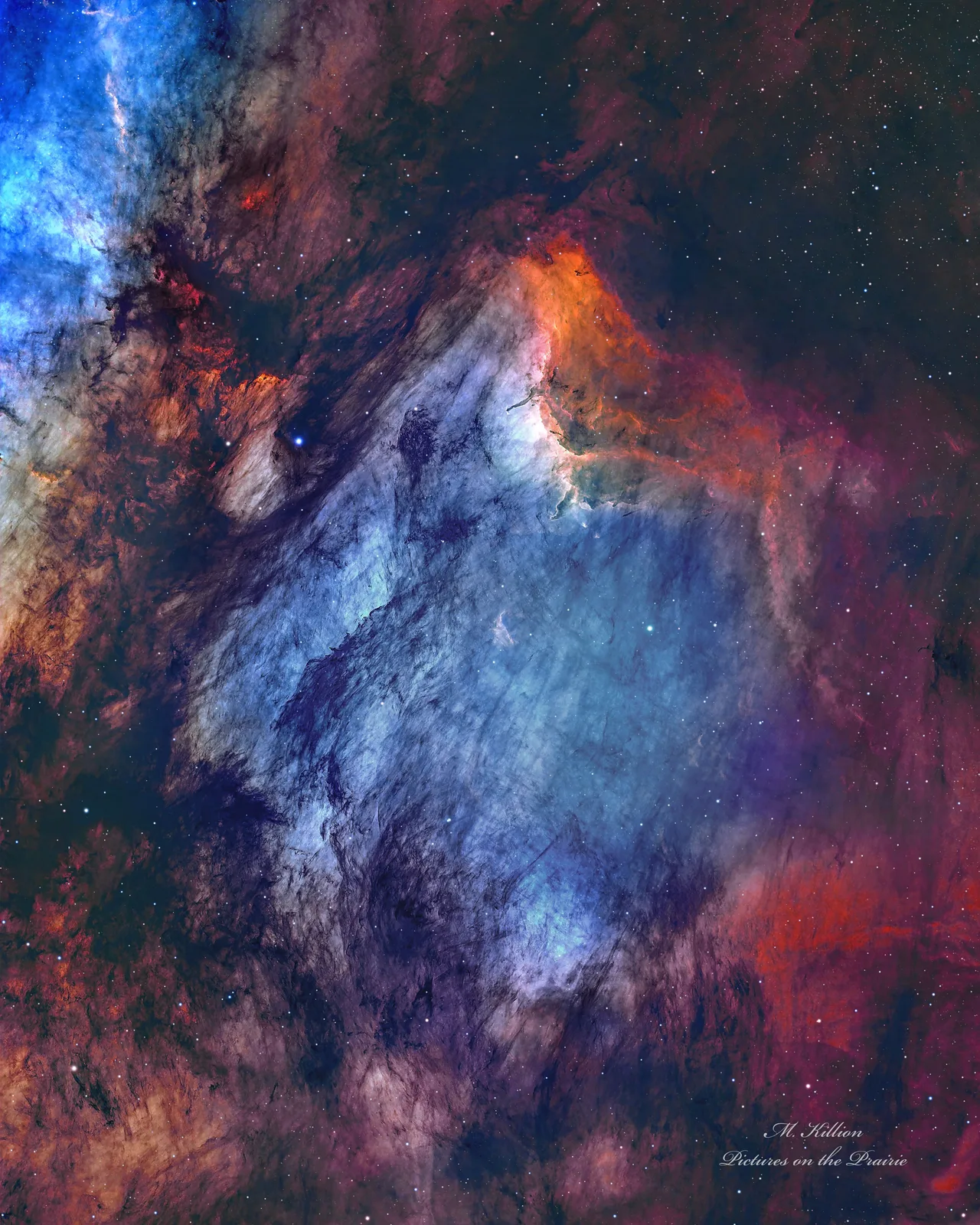
The Pelican Nebula in Gas, Dust, and Stars
Monday, 7 September 2026
                        Astronomy Picture of the Day

    Discover the cosmos! Each day a different image or photograph of our
      fascinating universe is featured, along with a brief explanation
                    written by a professional astronomer.

                              2026 September 7
     A busy starfield is dominated by red and blue glowing gas and dark
     filamentary dust. The nebula appears to some to have the shape of a
     pelican. Please see the explanation for more detailed information.

                 The Pelican Nebula in Gas, Dust, and Stars
                   Image Credit & Copyright: Mark Killion

   Explanation: The Pelican Nebula is slowly being transformed. IC 5070
   (an official designation) is divided from the larger North America
   Nebula by a molecular cloud filled with dark dust. The deep featured
   picture from Utah, USA incorporates 25 hours of exposure and brings out
   great details of this filamentary dust. The Pelican Nebula receives
   much study because it is a particularly active mix of star formation
   and evolving gas clouds. The light from young energetic stars is slowly
   transforming the cold gas to hot gas, with the advancing boundary
   between the two, known as an ionization front, visible in bright orange
   on the upper right. Particularly dense tentacles of cold gas remain.
   Millions of years from now, the Pelican Nebula, bounded by dark nebula
   LDN 935, might no longer be known as the Pelican, as the balance and
   placement of stars and gas will surely leave something that appears
   completely different.

           APOD's main NASA site is moving: From apod.nasa.gov to
                            science.nasa.gov/apod
                    Tomorrow's picture: geometric Saturn
     __________________________________________________________________

       Authors & editors: Robert Nemiroff (MTU) & Jerry Bonnell (UMCP)
            NASA Official: Amber Straughn Specific rights apply.
                  NASA Web Privacy, Accessibility, Notices;
                      A service of: ASD at NASA / GSFC,
                           NASA Science Activation
                             & Michigan Tech. U.
Recent days
 Sep 29Sh2-188: The Shrimp Nebula
 Sep 27Andromeda before Photoshop
 Sep 26Mirrored Meteor and Milky Way
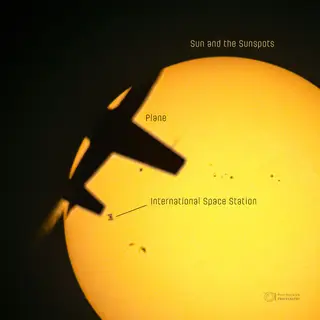 Sep 22Chance Triple Alignment: Plane, Space Station, Sun
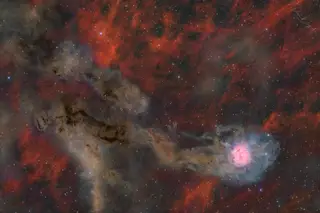 Sep 21Cocoon Nebula Wide Field
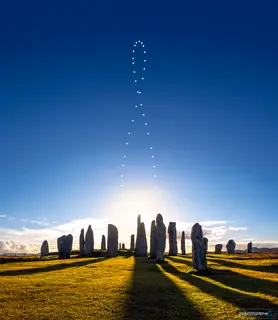 Sep 20Analemma over the Callanish Stones
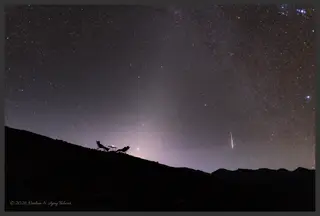 Sep 19A Zodiacal Night
 Sep 18Messier 33: The Triangulum Galaxy
 Sep 17A Treasure Chest in the Carina Nebula
 Sep 16Webb's View of M64
 Sep 15A Daytime Eclipse: Moon Occults Venus
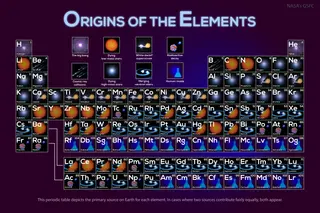 Sep 14Where Your Elements Came From